
Project Cabinet Package Inquiries in Westminster
Put quantities and project requirements into a cabinet package brief.
Send my cabinet inquiry
Or call (562) 203-3232. Calls only, we do not receive text messages.

Buying questions: contractor and property cabinet packages
A package request becomes useful when someone can trace every quantity to an approved type and every release to a current schedule. Keep product decisions, commercial terms, logistics, and separately contracted labor in distinct sections. That structure supports comparison without suggesting that this information service performs the project work.
About Westminster Cabinet Compass
Know who handles each part
Independent cabinet buying information and quote-request service. We do not manufacture, stock or install cabinets. A referral, supplier response, appointment or purchase is not guaranteed. Product availability, delivery and installation must be confirmed directly with the seller or separately engaged contractor.
Build a bill of materials by unit or room type
Create one approved schedule for each repeatable type, such as a standard kitchen, accessible alternate, break room, or vanity group. Within the type, list cabinet identifiers, sizes, construction, finish, panels, fillers, trim, hardware, and accessories. Then create a quantity table showing how many of each type belong in the current request.
Do not multiply an unresolved prototype across the project. Mark open dimensions, appliance inputs, substitutions, and finish decisions before extending quantities. A useful hypothetical example is ten repeated kitchens with one appliance alternate: keep the nine baseline units and the one alternate visible rather than editing the baseline and losing the distinction.
Assign a version and approval status to every schedule. “For pricing,” “approved for seller revision,” and “approved for release” describe different decisions. Name the person authorized to change status; Westminster Cabinet Compass does not approve drawings or quantities.
Control submittals, revisions, and substitutions
Keep a submittal log with the document name, revision, sender, date, requested action, and response. When a seller proposes a substitution, require it to identify the affected line, reason, construction or finish difference, quantity, price effect, and lead-term effect. A note saying “equal” is not enough for an auditable product decision.
Preserve prior versions. Compare every revision against the last approved schedule, not only against an email summary. Check cabinet quantities, sizes, finished ends, fillers, trim, accessories, and unit assignments. A change requested for one type should not silently propagate to another.
Record who can accept a substitution and what supporting evidence that person needs. If certification, samples, or technical documents matter, request them for the exact proposed product. Seller acceptance of the overall package and buyer approval of a substitution are separate decisions.
Plan releases without promising seller capacity
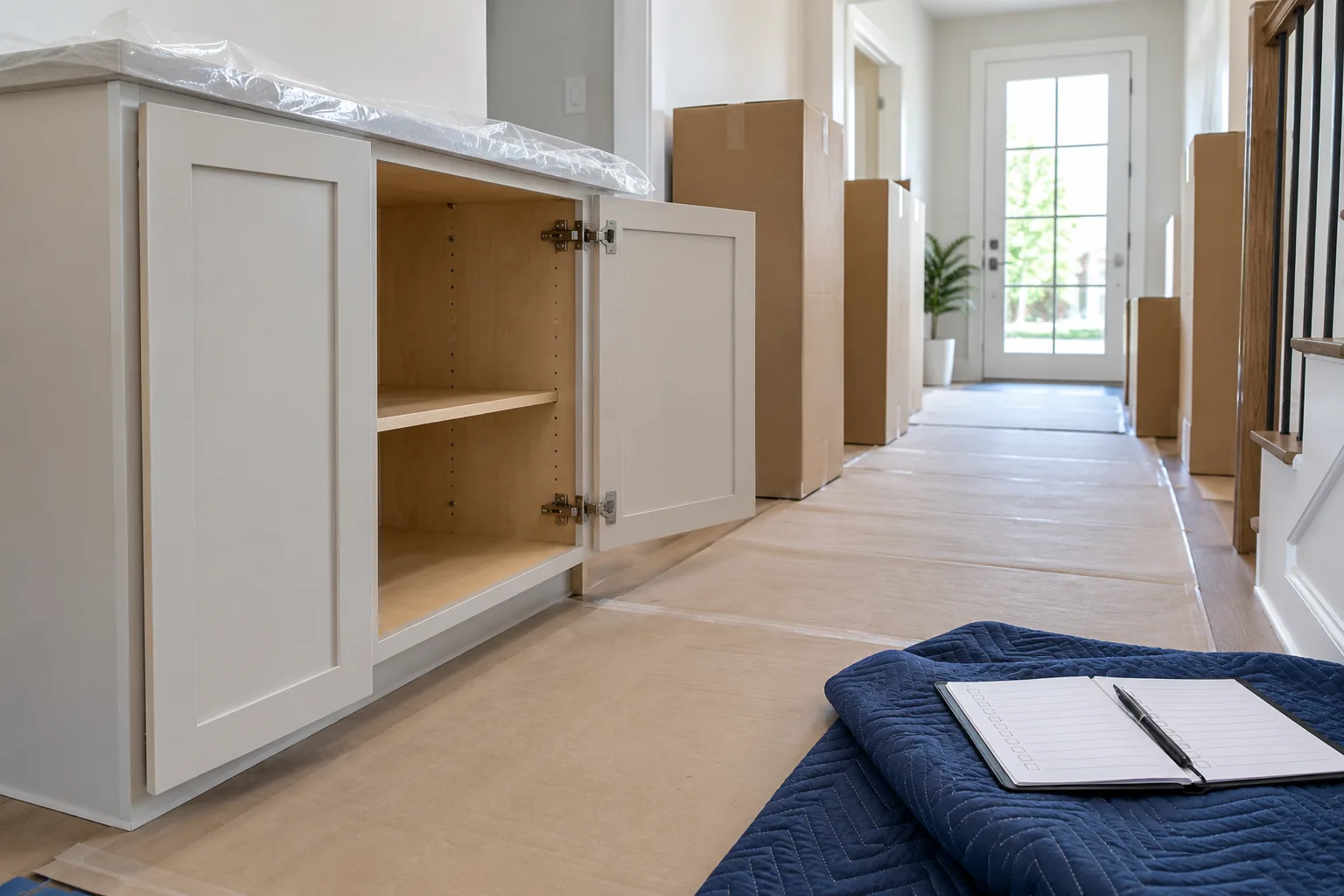
A phased inquiry should state the desired grouping and sequence, not assume the seller can meet it. For each proposed release, list unit types, quantities, requested destination, receiving contact, and dependencies. Ask the seller to confirm whether partial releases are accepted and how pricing, freight, payment, and remaining quantities are handled.
Use a reconciliation table after every release. Start with approved total quantity, subtract only accepted released quantities, and show the balance. Record cancellations and substitutions separately so the remaining schedule does not become an unexplained number.
Lead times, minimums, credit, and reservation rules are seller terms. Do not copy them from another project or infer them from a trade label. A planned date stays a planning input until the seller accepts it in writing.
Compare package cost, alternates, and freight
Compare the baseline product schedule first, including all panels, fillers, trim, accessories, and finish selections. Then show alternates in separate columns. Ask whether a package adjustment applies to the entire approved quantity, one release, or specific lines, and whether a later quantity change affects it.
Keep freight, pickup, delivery, handling, assembly, storage, taxes, and separate labor visible. Multiple releases can create different freight or handling terms. Installation, field measurement, preparation, utilities, countertops, and disposal require their own written scopes from the parties providing them.
Any planning amount is an estimate, subject to change, and the accepted seller quote determines final price. The FTC’s estimate guidance supports comparing scope, materials, completion information, and price. Apply it to each proposal without claiming a trade discount, credit account, or package acceptance.
Assign receiving and closeout responsibility
Name the receiving contact for every destination and release. Request available package information and seller instructions for counting, visible damage, missing items, and reporting. If products move from an initial receiving point to units later, document who controls that second handoff and protected storage.
Maintain an exception log tied to order lines. Record the package or item, visible condition, photographs when appropriate, report date, seller response, and resolution status. Do not invent a reporting window; obtain it from the seller’s terms and preserve the relevant labels and packaging as instructed.
Before closeout, reconcile ordered, accepted, received, damaged, replaced, returned, and outstanding quantities. Keep separate labor and installation completion outside the product ledger. The package file is complete when its records agree, not merely when the last shipment arrives.
Run a final authorization check
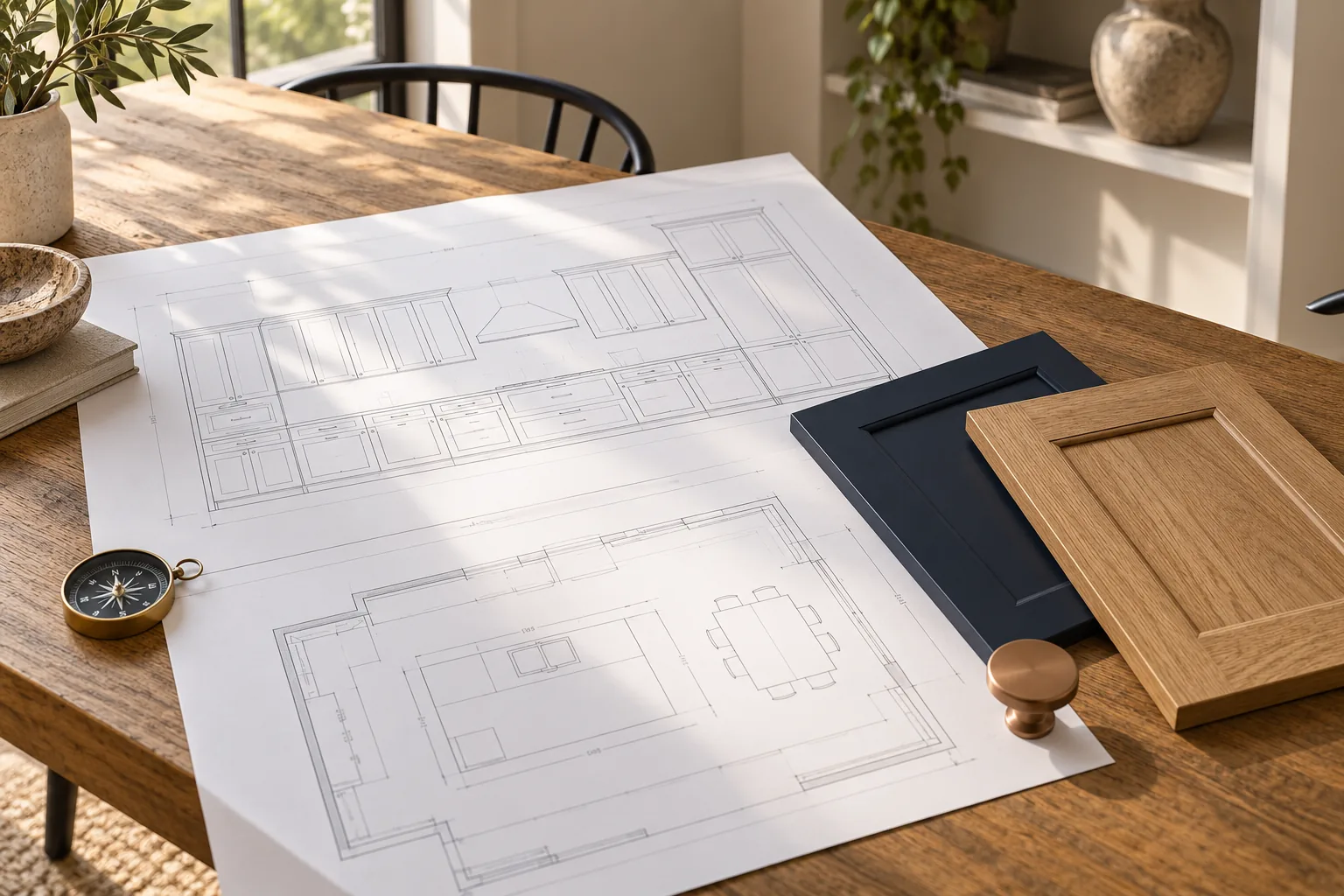
Before a release, verify the current schedule, approved substitutions, destination, contact, quantities, quote version, and commercial terms. Require the named buyer authority to approve the release. A project manager’s request, seller quote, and property approval may each serve different purposes.
Check that no old drawing is attached and that the remaining-balance table matches the release. Confirm seller acceptance directly. An inquiry does not reserve inventory or establish a relationship, and this site does not submit an order on the buyer’s behalf.
Archive the authorization with the resulting seller document. That chain lets a later reviewer explain what was requested, what the seller accepted, and which responsibilities stayed outside the cabinet purchase.
Audit a sample unit before multiplying the schedule
Before releasing repeated quantities, use one representative unit or room as an audit sample. Compare its drawing, bill of materials, appliance assumptions, panels, fillers, trim, accessories, and finish notes. The sample is a document check, not a physical mockup unless the buyer separately arranges one.
Ask the seller to return an itemized response for that type and resolve every unexplained line. If a cabinet width changes, check adjacent fillers and panels. If an appliance changes, reopen the related clearance and cabinet questions. If a substitution affects finish or hardware, show it on the schedule rather than only in correspondence.
After approval, lock the sample schedule to a revision and multiply only that version. Then independently check the extension math and unit counts. Preserve a short note showing who authorized the baseline and which alternates were excluded.
This checkpoint can reveal a systemic omission before it appears across many units. It does not prove the remaining rooms are identical. Site conditions, final measurements, and property requirements still belong to the people responsible for each location.
Inquiry process
From buying questions to a possible supplier quote
Sending an inquiry does not reserve products or book work.
Describe the purchase
Include project ZIP, room, approximate cabinet list and preferred timing.
Clarify requirements
Identify assembly, access, measurements and any separately arranged labor.
Confirm referral availability
An inquiry can be referred only if a suitable seller accepts the location and product request.
Review seller terms
Confirm the final drawing, itemized price, payment, delivery and return terms directly before ordering.
Illustrative product choices
Illustrative product visualizations, not completed work, local properties or supplier facilities.
Local buying information
Local inquiry guides
Questions
Contractor and Property Cabinet Packages: Common Questions
What schedule belongs in a package inquiry?
Use an itemized bill of materials by unit or room type, with quantities, construction, finish, panels, fillers, trim, hardware, accessories, drawing revision, and approval status. Show open decisions rather than multiplying an assumption.
Can quantities be released in phases?
Only if the seller accepts phased releases in writing. The buyer should propose quantities, sequence, destinations, and contacts, then reconcile accepted releases against the approved total. Pricing, freight, payment, and remaining quantities may change by seller terms.
Who approves drawings and substitutions?
The buyer must name the authorized project representative and any other required reviewer. The seller can propose or document a change, but Westminster Cabinet Compass does not approve drawings, substitutions, dimensions, or releases.
Is trade pricing or seller acceptance guaranteed?
No. Trade eligibility, minimums, credit, discounts, availability, lead terms, and acceptance are seller decisions. An inquiry creates no guarantee, reservation, dealer relationship, or automatic referral.
Talk to us about contractor and property cabinet packages
Describe the purchase and project ZIP in Westminster. Supplier acceptance and any referral are confirmed separately; no visit or quote is booked by this form.
Calls only, we do not receive text messages.